
Meyssam Hassandoust
Theoretical Physics — SUT
Quantum Gravity - String Theory
About
Hi! I'm Meyssam Hassandoust, a Master's student in Theoretical Physics at Sharif University of Technology. I'm passionate about understanding the fundamental nature of the universe through high-energy physics, with particular interest in Quantum Gravity, String Theory, and Algebraic Quantum Field Theory. This site collects research notes, papers, and teaching experience.
View / Download CV (PDF)Research Experience
The Imaginary Phase Problem in the Gravitational Path Integral
In the gravitational path integral, the saddle point approximation introduces an imaginary contribution—Polchinski's phase—which complicates state counting. Interestingly, this aligns with the structure of von Neumann algebras in gravitational regions. In de Sitter gravity, adopting an observer's perspective transforms the region's algebra into a type II von Neumann algebra, suggesting a potential link between Polchinski's phase and state counting.
Selberg Zeta in Flat Space Cosmologies
A generalization of the Selberg zeta function to flat space cosmologies, exploring connections between number theory and quantum gravity in non-AdS spacetimes. In a series of papers, using certain conjectures about the Selberg zeta function, researchers were able to derive the gravitational partition function for flat space and BTZ black holes. Our approach, however, is based on a more rigorous definition grounded in number theory, allowing us to obtain the gravitational partition function for these geometries without relying on conjectures.
Topological Aspects of Berry Phase
The Berry phase captures the geometric and topological properties of a quantum system's wavefunction under adiabatic evolution. Beyond a simple phase factor, it encodes topological information that underlies phenomena like the quantum Hall effect, topological insulators, and geometric magnetism, revealing how global system properties shape observable quantum behavior.
Poincaré Group Representations
Detailed study of group theory and irreducible representations of the Poincaré group in relativistic quantum mechanics.
Supersymmetry via GUP
Exploring supersymmetric quantum mechanics in the presence of a generalized uncertainty principle (GUP).
Dirac Supersymmetry in FRW
Supersymmetry analysis of the Dirac equation in Friedmann–Robertson–Walker (FRW) cosmological backgrounds.
Teaching Assistant
Sharif University of Technology
-
Electromagnetics III Spring 2026
- The problem sets are on Dr. Kargarian's website
-
Physics Laboratory I Fall 2024
Shahid Beheshti University
-
Mathematical Physics I Fall 2023
-
Quantum Mechanics I Fall 2022
-
General Physics I Fall 2022
-
Mathematical Physics II Spring 2021
-
Analytical Mechanics II Spring 2021
-
Mathematical Physics I Fall 2020
Research Interests
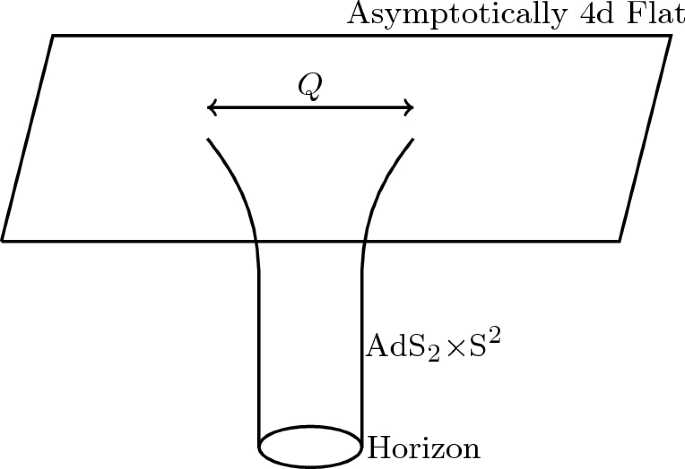 2D quantum gravity
JT Gravity
Jackiw–Teitelboim (JT) Gravity is a simple and powerful model of two-dimensional quantum gravity. Despite its minimal setup, it captures deep features of black hole physics, spacetime dynamics, and holography. JT gravity has become a central playground for exploring ideas like quantum chaos, information loss, and the AdS/CFT correspondence, offering insights that extend far beyond its deceptively small world.
dS Gravity
In the de Sitter spacetime, the presence of a cosmological horizon means that different observers generally have access to different regions of the universe. As we know, Gibbons and Hawking proposed that, like the entropy of a black hole, the entropy of dS spacetime should also be proportional to the cosmic horizon, which, unlike the black hole horizon, depends on the observer.
 operator algebras
Algebraic Quantum Field Theory
Algebraic quantum field theory is a suitable tool for studying systems and problems that are strongly entangled. A particularly important example is quantum field theory. To this end, this algebraic approach provides a new formulation in many areas of quantum gravity, such as AdS/CFT, and perhaps also in dS.